I get so caught up in the excitement of starting a new project most of the time I dive right in. About a year ago, when I was knitting my first Stonecrop sweater I was primed and ready to get knitting. I had stash yarn that I was pairing with some recently acquired enhancement yarn. I was going to hit the ground running and couldn’t wait to A) get on an airplane for uninterrupted knitting time and B) knit the snot out of this pattern so I could wear it at an event the following week. ( you should know that I did not finish the sweater in a week like I had very unrealistically thought I could)
As I read through the pattern though I discovered something… The sweater started from the neck, knit in the round from the beginning, with the collar ribbing and was intended to be CUT!!! Cut the neck band?!? Cut through what should had been the fishing on the sweater?!? NOOOOOOO!!!
I have had the pleasure of knitting with some very skilled folks in my years in the industry, and while being only a decade into my knitting I knew this felt hinky. My knitting group throughout time has helped me build my skills and I have learned from so many others knitting projects including the likes of @nellknits and my very own local Elizabeth Zimmerman, Sheila Pierce. These ladies showed me so many tips and tricks. They shared what they had learned along the way. It is the invaluable lessons that come with social knitting!!!
Through those ladies I learned that to Cut your knitting is fine. This can be done safely with toothy wool yarn that will essentially Velcro its loose fibers to its neighbors. Use a good method for securing your raw edge and then cover it over either with ribbon or a picked up and knit band of smaller yarn and you will have a neatly finished object destined to stand the test of time. But in my experience bands were added to pieces after the cutting. This gives you not only the ability to remove a worn band 25 years later and apply a new one giving a treasured sweater a new life, but it keeps the raw edge away from high wear areas at the neck and waist. For years and years seamstresses would replace collars in sewn garments as well as replace cuffs if the body of the garment was worth selvaging. Why not do the same, or have the option to do the same in knitting? It just makes sense to me.
Now what was even more confounding is that the Stonecrop, much like the Spark was a designed in a machine washable yarn. Yarns that has been treated, even gently are easier to care for and less likely to felt or stick to itself. While this makes getting a beautiful fabric tension easier, it would inherently make the life of the garment shorter if it were well worn and cut from Neck edge to Hem Edge.
Here in lies my next tip – and honestly if you do nothing else from this series except this step, I think you will be pleased.
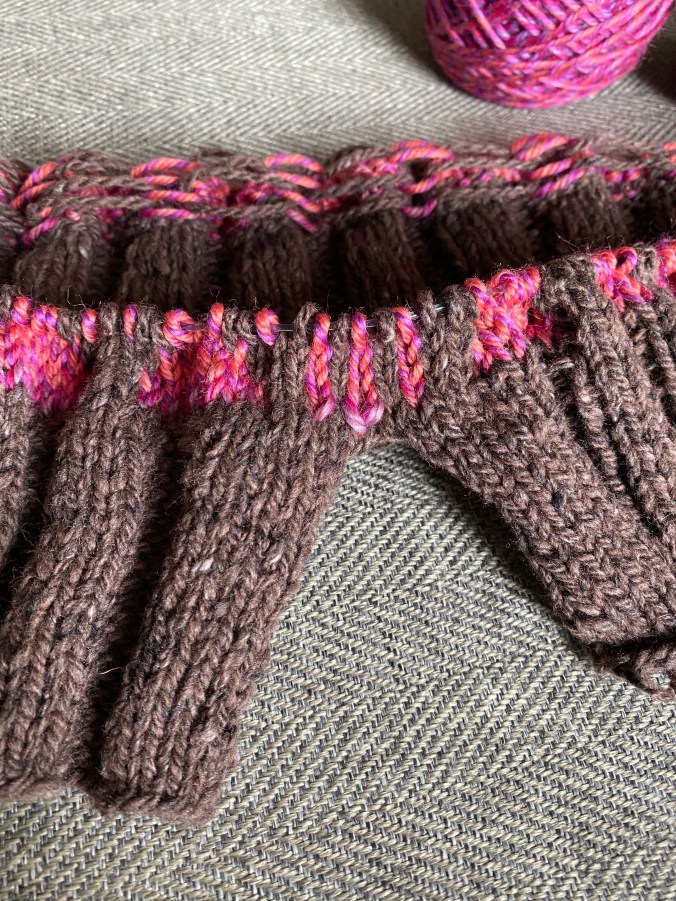
*** Cast on your hem band, and knit the three inches flat***
In doing this you will only have to cut the color work section of the body. You will have an open edge at the bottom of your sweater. You can remove the 6 stitches from the stitch count that will become the steek if you so desire and cast on 6 fewer stitches at the hem. Then using a backward loop cast on add the 6 steek stitches back before joining in the round. I opted not to do this because we will be picking up a band all the way down the edge of the sweater. I want to maintain consistency in the bulk, but I will only be using ribbon to secure my steeked edge inside the collar band.
I have linked my Stonecrop post so you can read more about that process. Ahh… that just feels better to me!
 Roving Creative Life